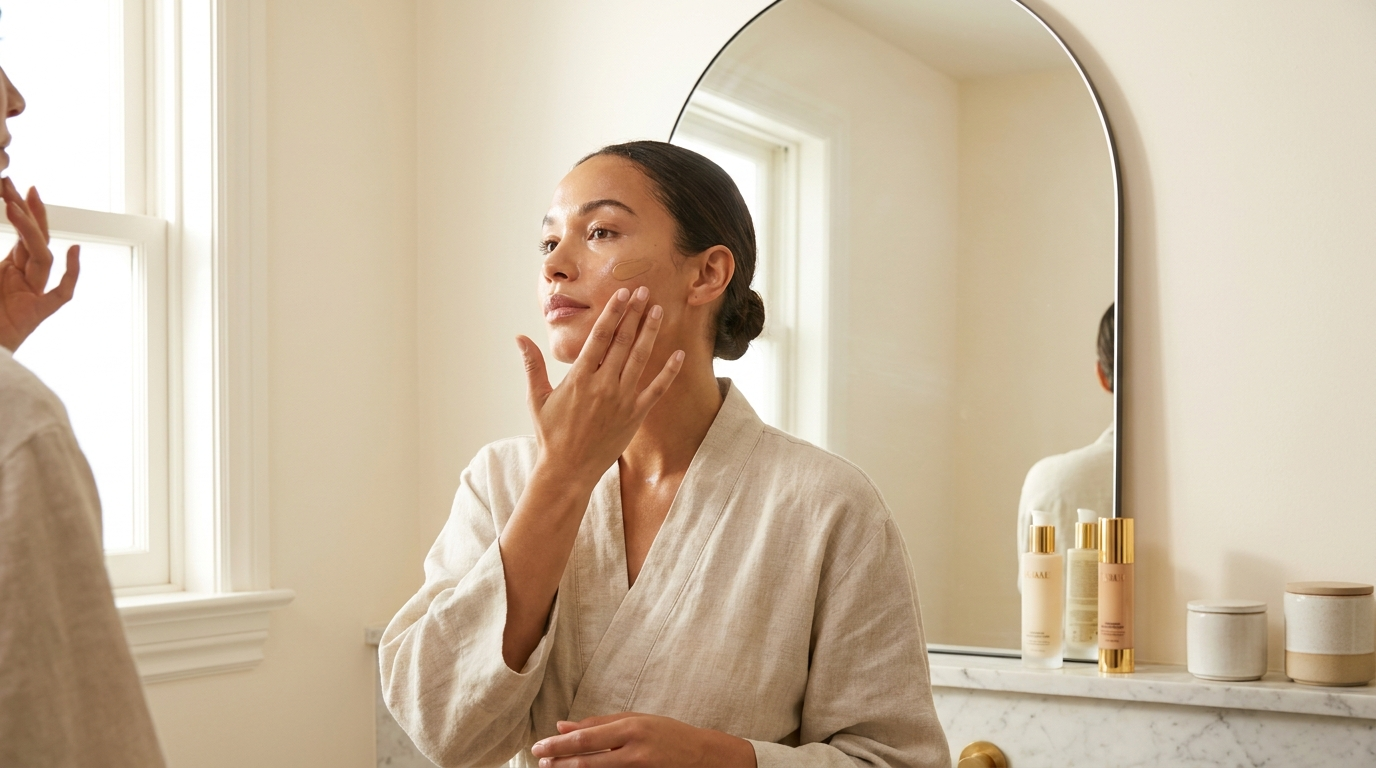
Ask a dermatologist the single most effective anti-ageing product and you'll get the same unglamorous answer every time: sunscreen. Not serums, not devices, not miracle creams — SPF. And yet most of us in the UK still treat sunscreen as a holiday product. Here's why that's a mistake, and how to make daily SPF effortless.
"But it's cloudy" — the UK's favourite SPF myth
UV radiation is not sunshine. Up to 80% of UV rays pass through cloud cover, which means a grey Tuesday in Manchester still delivers a meaningful UV dose to unprotected skin. The UK's UV index regularly sits at 3 or above from March to October — the level at which sun protection is recommended — and UVA, the ageing wavelength, is present all year round, even in December.
UVB burns, UVA ages
The two types of UV do different damage:
- UVB is the burning ray — strongest in summer, blocked by glass, the one you notice.
- UVA is the ageing ray — present year-round, passes through cloud and windows, and penetrates deeper into the skin where it breaks down collagen and elastin.
UVA is why "I never burn" doesn't mean "my skin isn't being damaged". The fine lines, loss of firmness and pigmentation patches we file under "getting older" are largely accumulated UVA exposure — researchers estimate the majority of visible facial ageing is sun-driven rather than chronological. That's also why daily SPF protects the investment you make in every other skincare product: there's little point using a brightening vitamin C serum in the morning and then letting UV undo the work by lunchtime.
Why most people quit daily sunscreen
Honestly? Because traditional sunscreen is unpleasant. It's greasy, it leaves a white cast, it stings eyes, and it's an extra step in a morning routine that's already rushed. The trick to actually wearing SPF every day is choosing one that doesn't feel like sunscreen.
The case for tinted SPF
A tinted SPF moisturiser solves several problems at once:
- No white cast — the tint evens out the finish instead of leaving a ghostly film.
- It replaces two steps. Light coverage plus sun protection means many people skip foundation entirely on everyday days.
- Iron-oxide tints add protection against visible light, which is relevant for pigmentation-prone skin.
- You'll actually use it — which beats a "better" sunscreen sitting unused in a drawer.
Our SPF 30 Tinted Sunscreen is built exactly for this: daily broad protection with a skin-evening tint that sits comfortably under or instead of makeup.
How to apply it properly
- Use enough. The most common SPF mistake. For the face and neck, aim for roughly a quarter teaspoon — or the "two finger" rule: two full strips of product down your index and middle fingers.
- Make it the last step of skincare, after serums and moisturiser, before any makeup.
- Cover the forgotten zones: ears, hairline, jawline, neck and the backs of hands (the first place sun damage usually shows).
- On high-UV days — outdoor lunches, long drives, summer weekends — top up in the afternoon.
Make it a habit, not a decision
The people with the best skin at 50 aren't the ones with the most elaborate routines — they're the ones who wore SPF on the days it didn't seem necessary. Keep it next to your toothbrush, apply it every morning regardless of the forecast, and let consistency do what no expensive treatment can undo later.