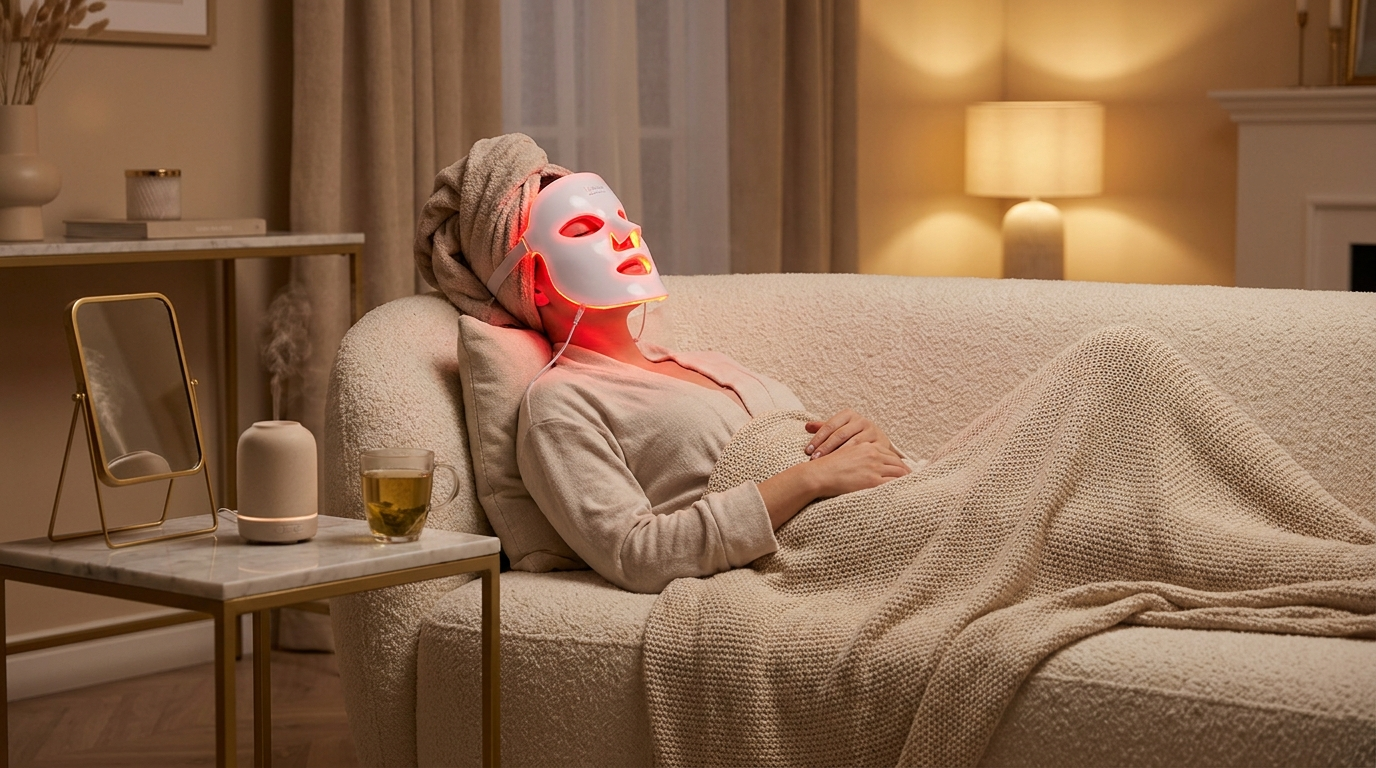
LED face masks have gone from sci-fi curiosity to bathroom staple, and the obvious question follows: is glowing red light at your face for ten minutes a day actually doing anything? The honest answer — backed by a growing body of research — is yes, with realistic expectations. Here's what the science says and what it doesn't.
How light can affect skin at all
The principle is called photobiomodulation: specific wavelengths of light are absorbed by structures in your cells and nudge them to behave differently. It's the same field NASA explored for wound healing in the 1990s, and it's why the technology started in dermatology clinics long before it arrived in home devices. Different wavelengths penetrate to different depths, which is why the colour matters:
- Red light (around 630–660nm) reaches the dermis, where studies suggest it supports fibroblast activity — the cells responsible for producing collagen. Research links regular red light use with improvements in fine lines, skin texture and overall tone.
- Blue light (around 415nm) works at the surface, where it targets the bacteria involved in breakouts. Clinical studies on blue light for mild-to-moderate acne show meaningful reductions in blemishes with consistent use.
- Near-infrared (around 850nm) penetrates deepest and is studied for skin recovery and easing muscle and joint discomfort — it's the wavelength that features alongside red in larger panel devices used on the body.
What results look like in practice
This is where honesty matters, because LED marketing often overpromises. Based on the published research:
- Timeframe: expect to use a mask consistently for 8–12 weeks before judging results. Single sessions produce a temporary glow at best.
- Scale of change: gradual improvement in texture, firmness and clarity — not a facelift. Studies measure real but modest changes.
- Consistency beats intensity: three to five short sessions a week outperforms occasional long ones.
LED therapy is genuinely one of the better-evidenced technologies in home beauty — more so than many serums — but it rewards patience and routine.
Are home masks as good as clinic treatments?
Clinic panels are more powerful, and a course of professional sessions will typically work faster. But clinic courses in the UK commonly run £40–£100 per session, and the research consistently points to cumulative, regular exposure as the driver of results. A home mask used four times a week for months delivers far more total light time than a monthly clinic visit — which is exactly the logic behind clinic-grade home devices like our LED Light Therapy Face Mask with Neck Attachment (the neck being the area most masks — and most people — neglect). If you want something you can wear while making coffee, a wireless photon mask removes the last excuse.
How to use an LED mask properly
- Start with clean, dry, product-free skin — some ingredients (like retinoids) are best kept for after your session, and anything on the skin can block or scatter light.
- Follow your device's session time — typically 10–20 minutes.
- Aim for 3–5 sessions a week, same time of day if it helps the habit stick.
- Apply your serums and moisturiser afterwards.
- Take a photo on day one. Changes are gradual enough that you'll doubt them without a before picture.
Who should be cautious
LED is non-invasive and well tolerated, but skip it or check with a doctor first if you're taking medication that increases light sensitivity, have a condition triggered by light, or are being treated for any skin condition. And while eye areas are shielded in good masks, never stare into the LEDs.
The verdict
LED face masks are not magic, and anyone promising overnight transformation is selling, not informing. But the underlying science is real, the dermatology research is genuinely promising, and for the price of a handful of clinic sessions you get a device you can use hundreds of times. Used consistently, it's one of the few pieces of beauty tech that earns its place on the shelf.